Age changes the pattern
Awake periods usually become more organized as sleep matures during the first years.
Baby wake windows by age
A wake window is simply the time between one sleep period ending and the next beginning. It can help describe a pattern, but it is not a medical threshold and no single timetable fits every baby.
Awake periods usually become more organized as sleep matures during the first years.
Behavior, feeding and the day’s previous sleep add context that a timer cannot provide.
Review sleep across 24 hours rather than optimizing one interval in isolation.
A practical guide
Wake windows are popular because they give parents a simple way to describe time awake. They can help you notice that a baby tends to settle after a similar sequence of feeding, interaction and quiet time.
They cannot prove why a baby is unsettled, diagnose a sleep problem or guarantee a nap. Growth spurts, illness, travel, feeding and normal development can all change the pattern.
During the newborn months, sleep and waking are usually spread across day and night, and awake periods often contain little more than feeding, changing and brief interaction. Under four months, variation is so wide that the American Academy of Sleep Medicine does not publish a formal total-sleep recommendation.
From four to twelve months, sleep often becomes more organized, but naps and awake periods continue to change. The AASM recommends 12 to 16 hours of total sleep per 24 hours, including naps, for this age group. From one to two years, its recommendation is 11 to 14 hours, including naps.
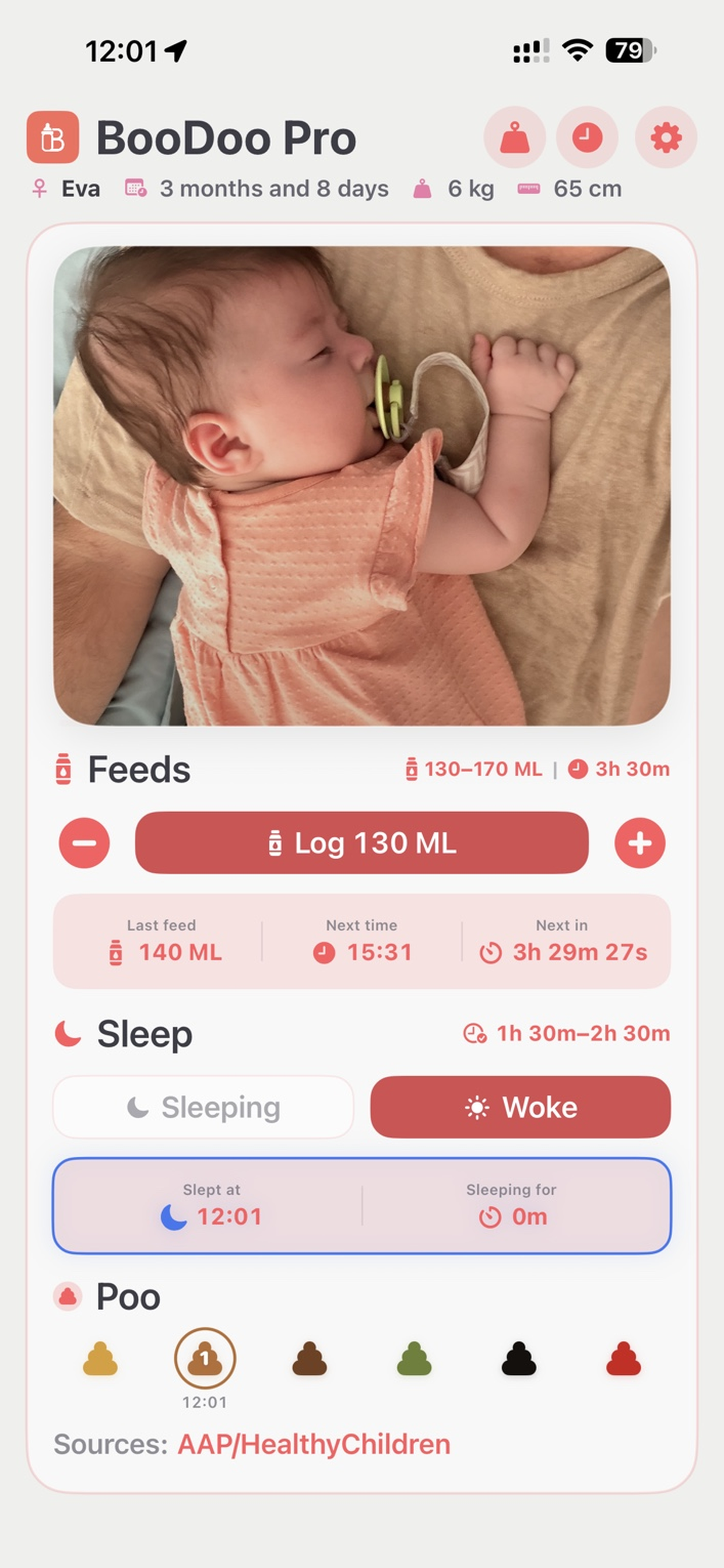
Record sleep start and end times for several ordinary days. BooDoo can calculate the awake interval between those entries, letting you compare your baby with their own recent pattern instead of a rigid internet chart.
Look at the sequence as well as the number: when the last nap ended, whether feeding is due, how stimulating the environment has been and whether sleepy behavior is appearing.
Reduced engagement, staring away, quieter movement, rubbing the face or fussiness may occur around sleep, but no individual cue is perfectly reliable. Hunger, discomfort and illness can look similar.
Begin a calm routine when the pattern and behavior suggest sleep may be approaching. If a baby does not settle, respond to the baby rather than forcing the clock.
Whatever time a nap begins, safe-sleep guidance remains the same: place babies on their back on a firm, flat surface intended for infant sleep and keep pillows, blankets, bumpers and soft toys out of the sleep area.
Speak with a pediatrician or qualified health professional about persistent sleep concerns, breathing problems, unusual difficulty waking, poor feeding or growth.
Review the current information from the official sources linked below. Guidance and product features can change over time.
FAQ
It is the elapsed time from waking at the end of one sleep period until the beginning of the next.
No. They are practical observations, not universal medical thresholds. Sleep needs and daily patterns vary between babies.
Do not change sleep or feeding solely to match an online schedule. Follow the care plan given for your baby and ask a qualified professional when unsure.
Both can describe the day, but established professional recommendations focus on total sleep across 24 hours rather than exact wake-window targets.
Explore BooDoo
Track feeding, sleep, diapers and growth on iPhone and iPad.