One connected timeline
View breastfeeds, bottles and diaper changes in the order they happened.
Newborn feeding and diaper log
A combined feeding and diaper log makes it easier to answer two everyday questions: what went in, and what happened afterward. The goal is a clear record—not a scorecard for your baby.
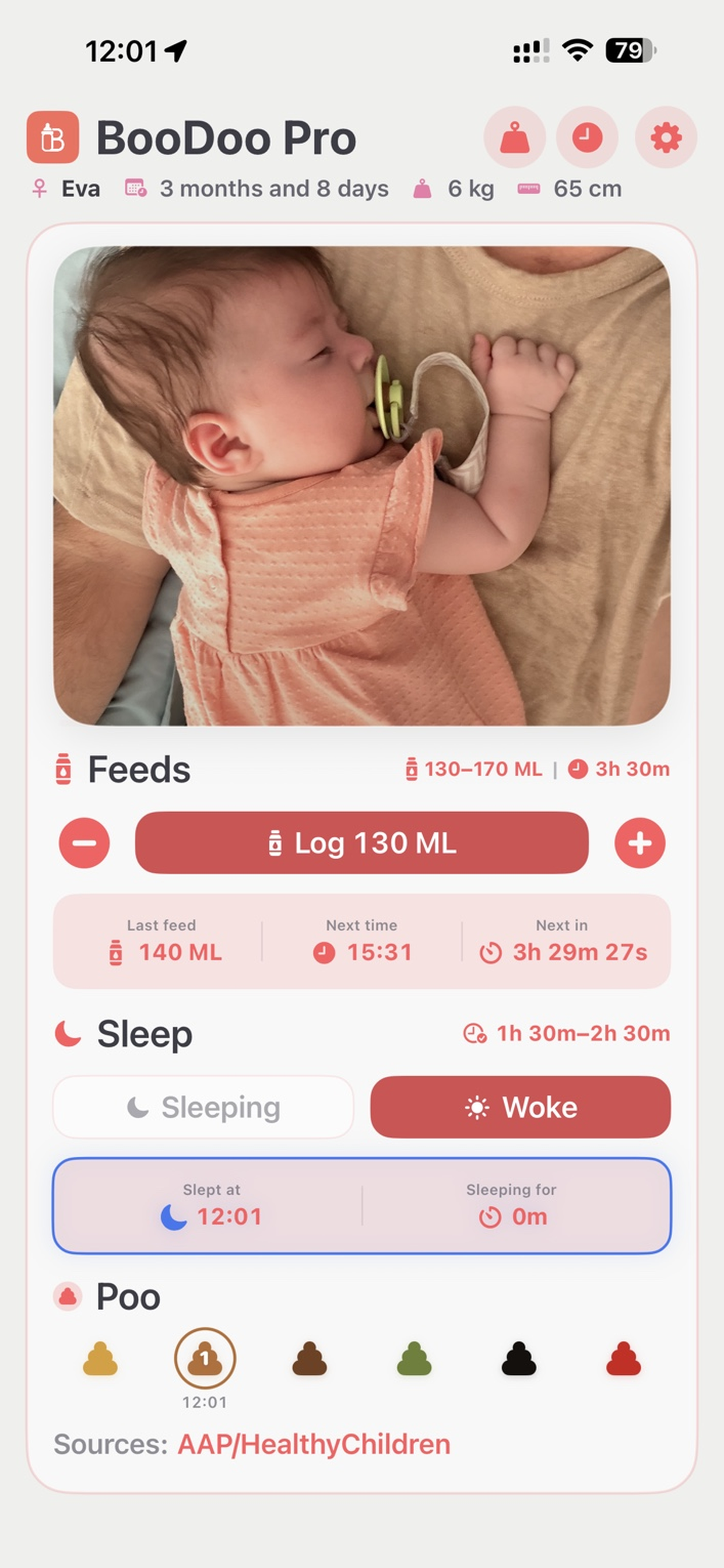
View breastfeeds, bottles and diaper changes in the order they happened.
The next caregiver can see the latest feed and change without guessing.
Bring a concise pattern and your questions instead of reconstructing several days.
A practical guide
A newborn log works best when an entry takes only a few seconds. Use one row per feed or diaper change and keep optional notes short.
Record the event when it happens when possible. If you add it later, an approximate time is still better than inventing detail you do not remember.
The American Academy of Pediatrics notes that wet-diaper counts change across the first days after birth. Its general guidance describes two to three wet diapers per day in the earliest days and at least five to six per day after day four or five, while stool frequency varies more by feeding method and age.
Those figures are educational context, not a diagnosis or a personalized target. Prematurity, illness, feeding difficulties and an individual care plan can change what your clinical team expects.
Look for a clear change from your baby’s recent pattern rather than judging one isolated feed or diaper. Add a short factual note and contact the professional responsible for your baby when you are concerned.
Do not delay medical help while waiting to collect more data. A log supports a conversation; it is not a test that has to be completed first.
Paper is excellent for a temporary bedside log and is easy to share in the room. A phone tracker becomes more useful when several days need to be summarized, intervals are hard to calculate or more than one caregiver needs the latest information.
Choose the method you will actually use. BooDoo keeps feeding, diapers, sleep and growth in one record and calculates useful timing from the entries you make.
A clear log helps turn a vague concern into a specific question: feeding sessions have become shorter, wet diapers changed from the recent pattern, or the baby is difficult to wake for feeds.
Urgent warning signs vary by age and situation. Contact an appropriate healthcare service promptly whenever you are worried about hydration, breathing, fever, unusual sleepiness, repeated vomiting or feeding.
Review the current information from the official sources linked below. Guidance and product features can change over time.
FAQ
Record the time, feeding type, duration or amount, and whether each diaper was wet, dirty or mixed. Add notes only when useful.
Yes. Separate categories make the record easier to describe. A diaper containing both can be marked as mixed.
There is no universal duration. Some families use it during the early weeks; others continue when a clinician asks for a record or multiple caregivers need it.
A change can be important, but a tracker cannot diagnose dehydration. Contact a qualified healthcare professional promptly if you are concerned.
Explore BooDoo
Track feeding, sleep, diapers and growth on iPhone and iPad.