Log in the moment
A quick entry is easier and usually more accurate than reconstructing the day at night.
How to track baby feeding and sleep
Feeding and sleep influence the shape of a baby’s day, but the log should remain simple. Record the facts you will use, review them in context and leave diagnosis to qualified professionals.
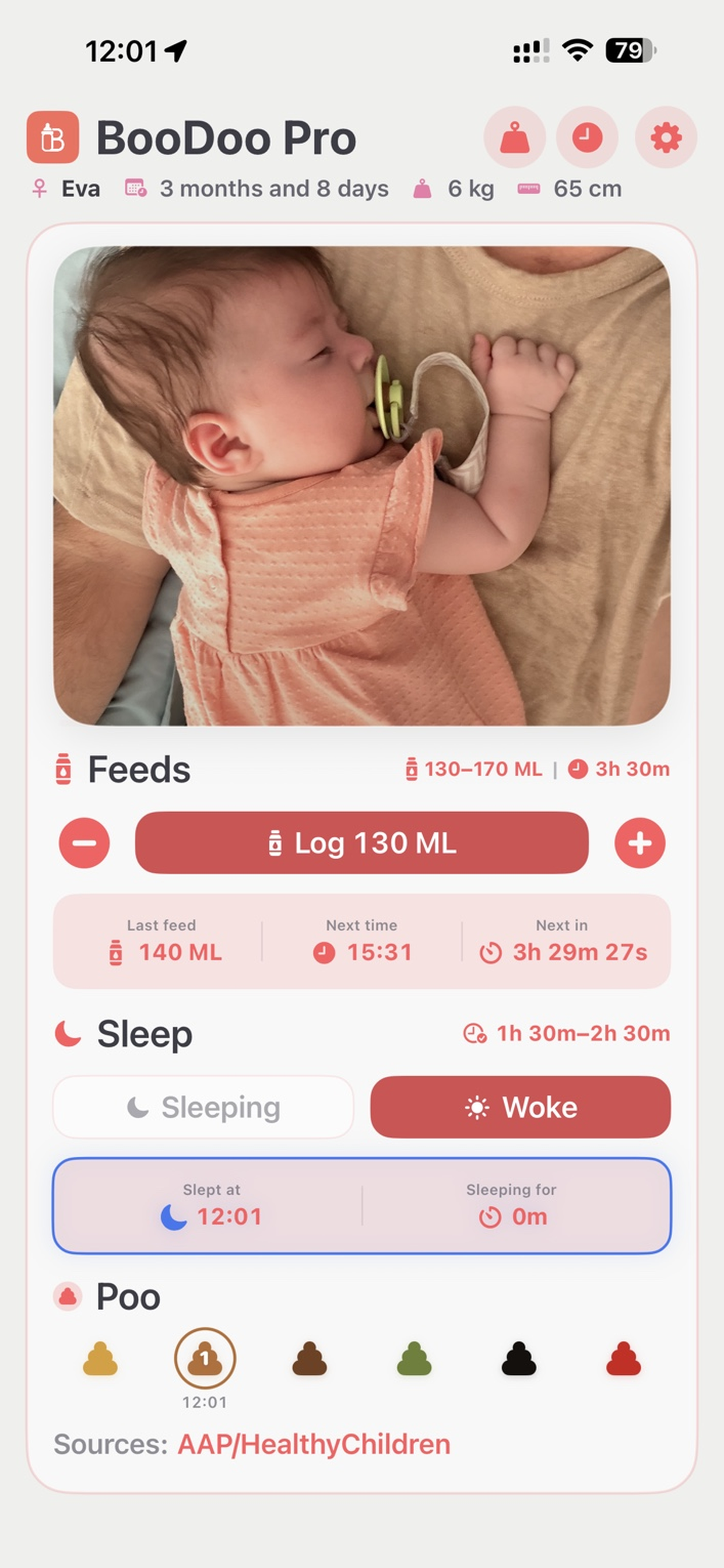
A quick entry is easier and usually more accurate than reconstructing the day at night.
A shared timeline shows what happened before and after each rest period.
Several ordinary days provide more context than one unusually difficult night.
A practical guide
A clear purpose prevents the log from expanding endlessly. You may want easier caregiver handovers, a reminder of the last feed, a 24-hour sleep view or a short record requested by a healthcare professional.
Choose only the fields needed for that purpose. You can always add detail later, but a complicated routine is difficult to sustain.
For breastfeeds, record the start time and duration, with the breast used if that helps your routine. For bottles, record the time and amount taken. Keep pumping entries distinct from feeds so milk expressed is not mistaken for milk consumed.
Do not compare feeding methods as though one set of numbers should look like another. Follow responsive feeding and the individualized advice provided for your baby.
Mark when sleep begins and when the baby wakes. Those two facts allow a tracker to calculate duration, total sleep and the awake interval without asking you to do mental arithmetic at night.
Record naps and night sleep in the same 24-hour view. The distinction can still be useful, but babies do not always organize sleep according to the labels adults use.
Look for a repeated sequence across several ordinary days: feeds becoming easier or harder, sleep shifting later, or caregiver handovers creating missed entries. A pattern is more useful when the underlying data is reasonably consistent.
Avoid treating the dashboard as a grade. Babies are variable, and a different day is not automatically a bad day.
During a handover, the next caregiver usually needs only the latest feed, current sleep state, recent diapers and any important note. A clean record reduces repeated questions and duplicated feeds.
Pause or simplify tracking if it adds anxiety without helping a decision. Contact a healthcare professional promptly for concerns about feeding, hydration, breathing, fever, unusual sleepiness, growth or behavior rather than waiting for the chart to become clearer.
Review the current information from the official sources linked below. Guidance and product features can change over time.
FAQ
Use one timeline and record only feeding type, time, amount or duration, and sleep start and end times. Consistency matters more than excessive detail.
They can be labeled separately while still contributing to the same 24-hour total. This makes both the daily pattern and total sleep easier to review.
There is no fixed number. Several ordinary days provide more context than one day, but normal development can change the pattern quickly.
No. The record may help you describe a concern, but diagnosis and personalized advice require a qualified healthcare professional.
Explore BooDoo
Track feeding, sleep, diapers and growth on iPhone and iPad.