Start with four basics
Feeding, diapers, sleep and growth usually provide the clearest daily picture.
What to track for a newborn
A simple newborn record can answer practical questions during a tired week: when your baby last fed, how sleep is spread across the day, how diaper output is changing and what to mention at the next appointment.
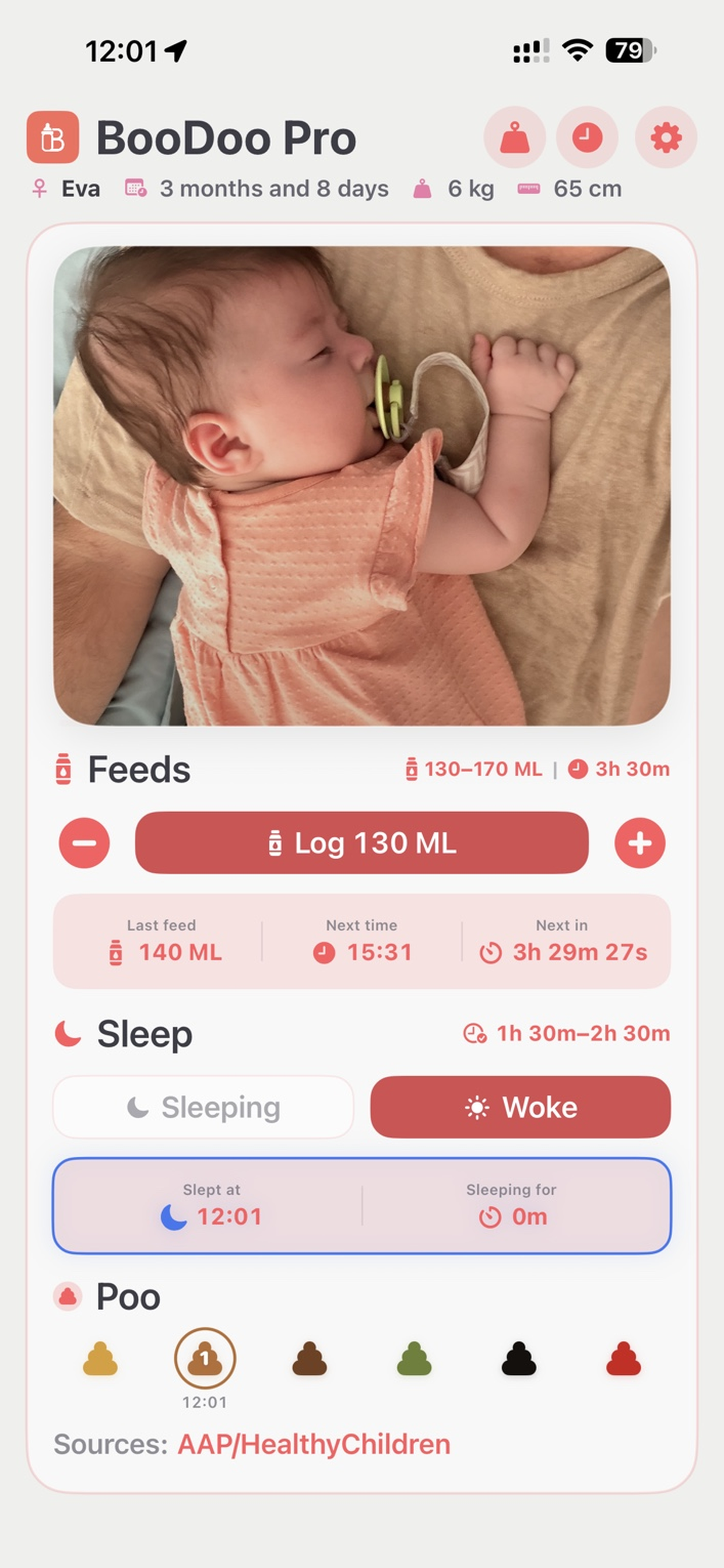
Feeding, diapers, sleep and growth usually provide the clearest daily picture.
A log supports memory and conversations; it cannot determine whether a baby is healthy.
Choose a level of detail that remains manageable during feeds and night waking.
A practical guide
Newborn care repeats quickly, and the events can blur together. A useful record begins with feeding, diapers, sleep and growth rather than a long list of optional measurements.
You do not need perfect data. A consistent, simple log is more useful than a complicated system that is abandoned after two days.
For breastfeeding, parents may record the start time, duration and breast used when that information is helpful. For bottles, the time and amount offered or taken are usually the most practical details. Pumping can be kept separately so expressed milk is not confused with milk the baby actually drank.
Feeding needs vary with age, birth history, growth and feeding method. Use the plan agreed with your pediatrician, midwife or feeding specialist rather than changing feeds to make the log look more regular.
Wet and dirty diapers give useful context to a feeding record. Logging both in the same place can help a parent describe changes clearly instead of relying on memory.
Output changes during the first days of life and differs between breastfed and formula-fed babies. A log can reveal a change, but only a qualified professional can interpret it for an individual newborn.
Newborn sleep is fragmented and highly variable. Record when sleep begins and ends if the information helps with handovers or gives you a clearer 24-hour view, but do not expect a newborn chart to resemble an adult schedule.
Tracking never changes safe-sleep practice: place babies on their back on a firm, flat sleep surface, and keep soft bedding and toys out of the sleep space.
Growth is best understood as a trend using accurate measurements, not as a single home number. Keep dates and measurements from health appointments together so the professional following your baby can interpret them on an appropriate growth chart.
A short note can also preserve a question you want to ask. If tracking increases anxiety or becomes compulsive, simplify it or pause and discuss the concern with a healthcare professional.
Review the current information from the official sources linked below. Guidance and product features can change over time.
FAQ
No. Many families only need feeding, diapers and sleep for a limited period. Track what has a clear practical purpose for your household or healthcare plan.
Usually the feeding type, time, duration or amount and an optional short note are enough. Follow any additional instructions given for your baby.
Only if it is useful. A full sleep record can help show the 24-hour pattern, but it should not add unnecessary stress.
No. A tracker organizes observations. Concerns about feeding, hydration, breathing, temperature, growth or behavior require professional medical advice.
Explore BooDoo
Track feeding, sleep, diapers and growth on iPhone and iPad.